March 25, 2026
Zen and the Art of Programming
I
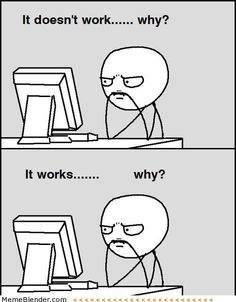
In coding, an error doesn’t paralyze: it multiplies paths. The mind shifts through hypotheses, tries one angle, retreats, insists from another. Debugging becomes a mantra: fail, adjust, begin again. Over time, the rhythm settles into the body. As in zen, it’s not about arriving, but sustaining the practice.
II
Bradbury understood something crucial: any craft can be a vehicle toward something deeper. In Zen in the Art of Writing, he borrows ideas from the classic archery manual to explain how the tension of the bow suspiciously resembles the pressure of your fingers typing on the keyboard at two in the morning. The concentration, the rhythm, setting aside the ego: it's the same principle with different tools. Writing, like programming or shooting an arrow, isn't just about technique.
III
Work, giving us experience, results in new confidence and eventually in relaxation. The type of dynamic relaxation again, as in sculpting, where the sculptor does not consciously have to tell his fingers what do to. [...] Suddenly, a natural rhythm is achieved. The body thinks for itself.
A.K.A: the more you do it, the more you trust that you can do it, until one day you notice that everything falls into place: thought gets ahead of fingers, and flow appears effortlessly.
IV
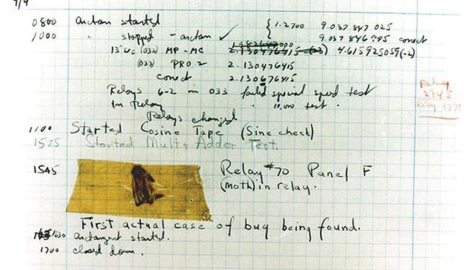
From that infinite loop there is an exit: the error, which can also be an opportunity. An unexpected detour that opens another possibility. A feature you weren't looking for, but now makes sense. Ah, the poetics of domesticated entropy.
V
I try to chip away at the silence by typing in a trance; inside the fingers that touch these keys there’s worry, tension, anxiety — the buzzing tips of a circuit bristling and wanting to organize a movement that pierces through everything and crosses to the other side. I stretch my back again and feel a murmur: it’s the nerves of a joy that was dozing and is now waking up with the drip of letters painting themselves on this screen; the screen appears like a skin where I rest my whispers. The silence is no longer, and other voices have started to sing their little hidden music.
(Free translation)
This isn't Bradbury, it's Leticia Obeid in Galería de copias, naming that moment where something ignites and writing, like code, stops being effort to become rhythm, intuition, desire.
VI
Bradbury also says that to fail is to give up.
But you are in the midst of a moving process. Nothing fails then. All goes on. Work is done. If good, you learn from it. If bad, you learn even more. Work done and behind your is a lesson to be studied. There is no failure unless one stops. Not to work is to cease, tighten up, become nervous and therefore destructive of the creative process.
VII
So, what do I mean by all this? That programming is also putting the body into it. It's not just solving problems, but enduring. The zen programmer's faith isn't in immediate success, but in practice. In the infinite loop of trying once more. Running the project again, but with philosophical dignity, and seeing what happens. Until, finally, the issue is resolved or the learning cycle starts again.